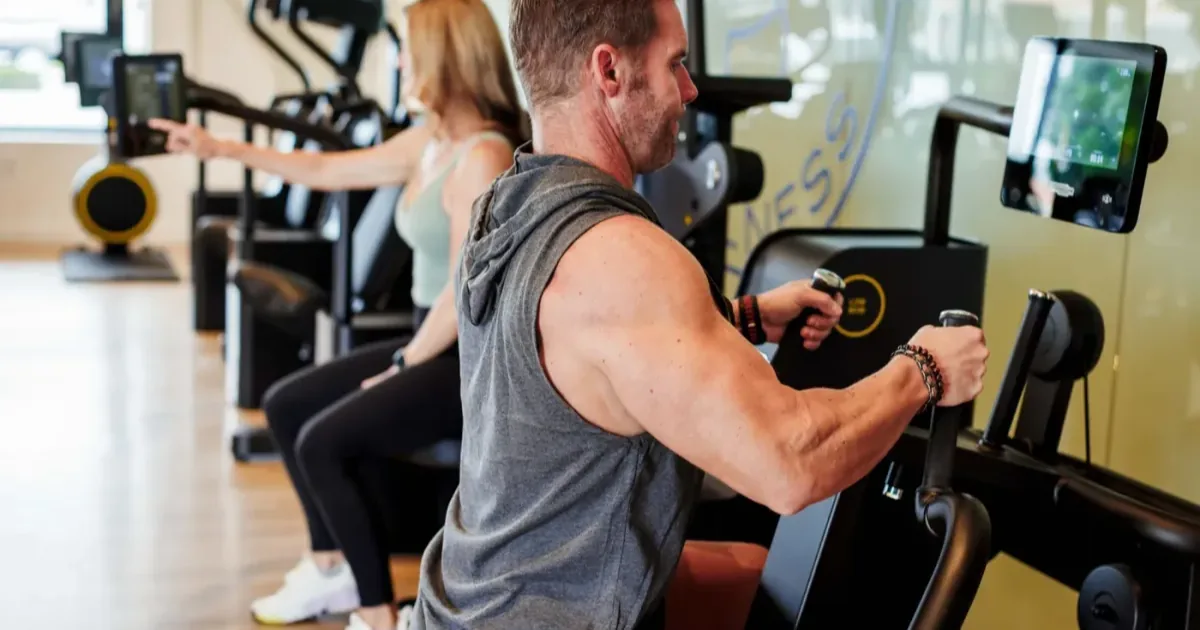
Longevity training is exercise and recovery programming designed to extend your healthspan — the years you stay strong, mobile, and independent — rather than just improve short-term fitness. After 40, it centers on preserving muscle and bone, protecting metabolic health, and prioritizing recovery. At Bluprint Wellness in Solana Beach, longevity training integrates personalized strength work, advanced recovery, and physician-guided functional medicine into one coordinated program.
There is a meaningful difference between training to look good for summer and training to still be carrying your own groceries, hiking with your grandkids, and sleeping well at 75. The first is fitness. The second is longevity — and after 40, it becomes the more important goal. This guide explains what longevity training actually involves, why the science points toward strength and recovery as its foundation, and how an integrated approach in Solana Beach brings the pieces together.
What is longevity training?
Longevity training is exercise programming organized around one outcome: extending your healthspan, the number of years you live in good physical function, not just your total lifespan. Where conventional fitness chases a number on a scale or a personal record, longevity training asks a longer question — what will keep this body capable, resilient, and independent for decades? In practice that means prioritizing the things that decline with age and training them deliberately: muscle mass, bone density, mobility, balance, cardiovascular capacity, and recovery.
It is also personalized in a way generic programs are not. Your training at 45 should account for your movement history, your injuries, your hormonal and metabolic markers, and your recovery capacity. At Bluprint, that personalization is powered by AI-driven Technogym technology and guided by expert coaches — the program adapts to your biology rather than applying the same template to everyone.
Why does training change after 40?
The body's response to training does not stop after 40 — but its priorities shift. Starting in your late 30s, muscle mass gradually declines through a process called sarcopenia. Research indicates adults can lose roughly 3–8% of muscle mass per decade after 30, with the rate accelerating later in life. Bone density follows a similar downward curve, and the body's recovery margin narrows, meaning technique and rest matter more than they did at 25.
None of this is a reason to train less. It is a reason to train smarter — to make resistance training the foundation, to respect recovery as part of the work rather than an afterthought, and to pay attention to the metabolic and hormonal signals that conventional fitness ignores. This is precisely where an integrated model earns its keep.
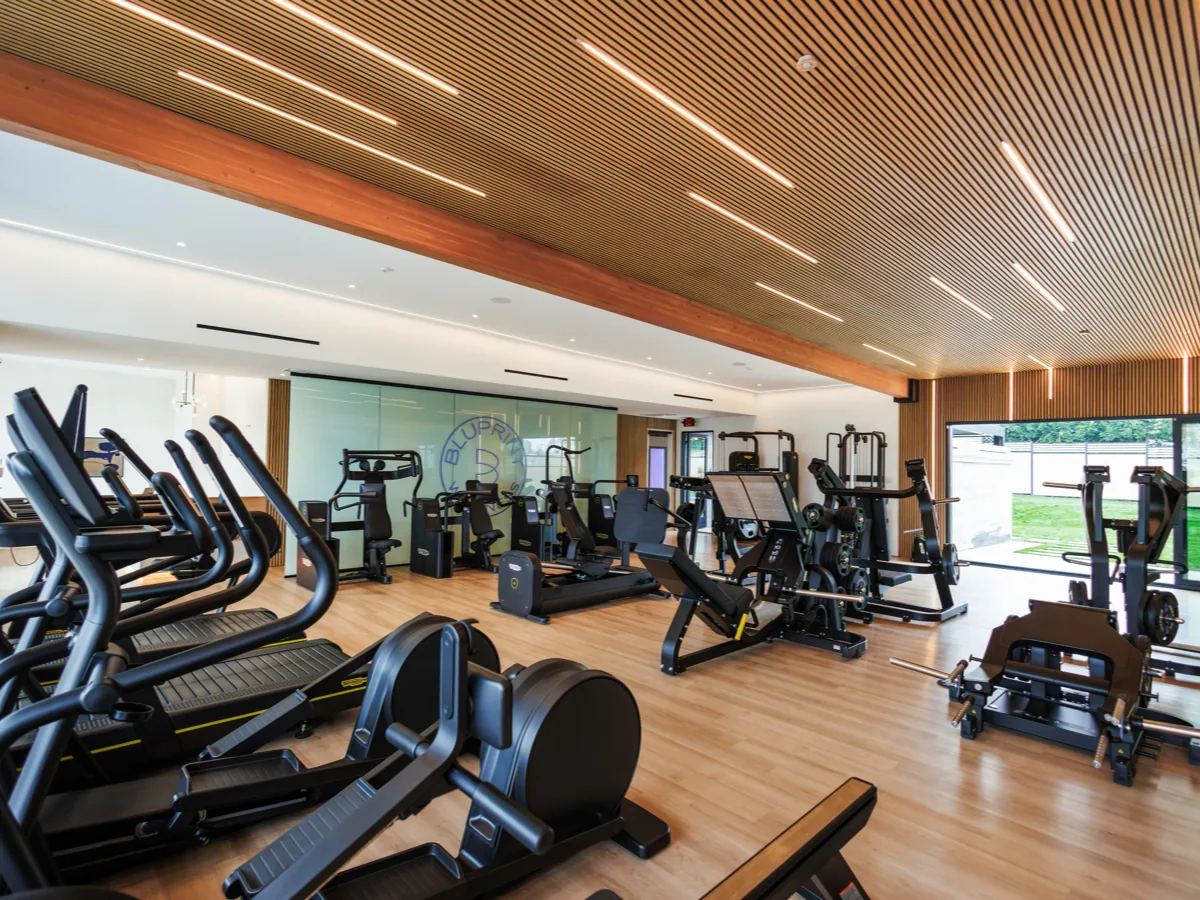
The four pillars of longevity training
Treating exercise in isolation is the central limitation of most gyms. A longevity approach coordinates four elements so they reinforce each other rather than compete:
- Performance training — science-driven strength, mobility, and resilience work that preserves muscle and bone, personalized to your goals and your biology.
- Advanced recovery — modalities such as infrared sauna and contrast therapy that support the body's repair processes, so training stress becomes adaptation rather than accumulated fatigue.
- Functional medicine — physician-guided, root-cause assessment of the metabolic and hormonal factors that influence how you age, delivered at Bluprint in partnership with Dr. Lain Lye, ND.
- Community — the social and lifestyle context that research consistently links to longevity, from shared accountability to genuine connection.
The point of integration is simple: your training informs your recovery, your recovery protects your training, and your functional-medicine markers tell both what to prioritize. Few environments coordinate all four under one roof.
How should someone over 40 start?
Begin with an honest assessment rather than a workout. Movement quality, training history, injury considerations, and — where appropriate — metabolic and hormonal markers give you a baseline that generic programs skip. From there, the foundation for most adults over 40 is two to three structured strength sessions per week, built around fundamental movement patterns, progressed gradually, and paired with deliberate recovery.
A few principles matter more than any single exercise: prioritize technique over load, progress in small steady increments, treat recovery as part of the program, and work with coaches who can build around your limitations rather than ignore them. The U.S. Physical Activity Guidelines recommend adults include muscle-strengthening activity at least twice per week alongside regular aerobic activity — an achievable target with the right plan.
If you want to see what an integrated, longevity-focused program feels like in practice, Bluprint Wellness in Solana Beach works with a select number of members by application. It is built for exactly this: training that keeps you capable for the long run.