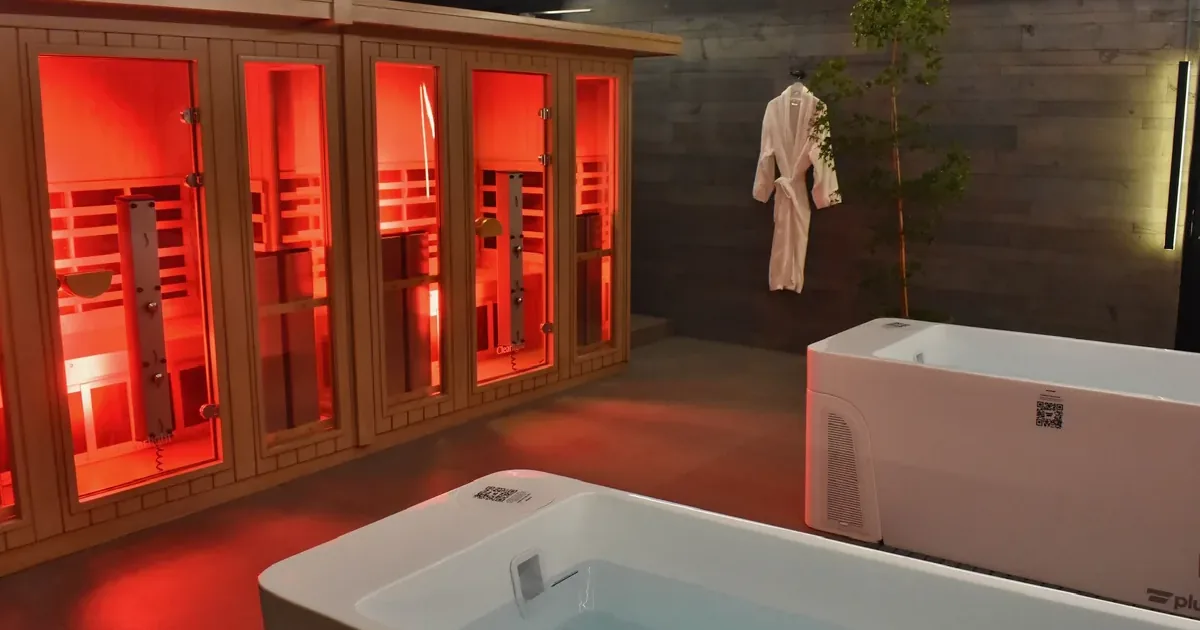
Recovery is not optional — it is when the body adapts to training and actually gets stronger. Pairing structured training with advanced recovery modalities like infrared sauna and contrast therapy supports circulation, helps manage training fatigue, and keeps you consistent. At Bluprint Wellness in Solana Beach, recovery is built into the membership as one of four integrated pillars rather than sold as a separate add-on. Individual modalities affect everyone differently, so protocols are personalized.
Most people treat recovery as what happens when they are not training. That framing is backwards. Recovery is part of training — the part where the stress you created in a session is converted into strength, resilience, and adaptation. Skip it, and you accumulate fatigue instead of progress. This is why a serious approach to fitness treats recovery as deliberately as the workout itself.
Why does recovery matter as much as training?
Training is a stimulus, not the result. When you train, you create controlled stress; the adaptation — the actual strength and resilience you are after — happens during recovery. Without adequate recovery, that stress simply accumulates, raising injury risk, stalling progress, and making consistency harder to sustain. For adults over 40, whose recovery margin is naturally narrower, this matters even more.
That is the case for building recovery into your routine rather than hoping it happens on its own. An integrated environment treats recovery modalities as tools that support the training cycle — helping you show up to the next session ready to work rather than depleted.
What is infrared sauna and how is it used in recovery?
An infrared sauna uses radiant heat to warm the body directly at a lower ambient temperature than a traditional sauna, which many people find more comfortable to tolerate for longer sessions. As a recovery practice, time in the sauna is widely used to support relaxation and circulation and to create a deliberate wind-down ritual after training.
Individual responses to heat exposure vary, and sauna use is not appropriate for everyone — certain cardiovascular conditions and pregnancy are common reasons to check with a physician first. At Bluprint, recovery protocols sit within an integrated model where functional-medicine guidance from Dr. Lain Lye, ND is available to help personalize what is appropriate for each member.
What about cold plunge and contrast therapy?
Contrast therapy alternates exposure to heat and cold — for example, moving between a sauna and a cold plunge. Many athletes and active adults use cold and contrast practices as part of a recovery routine and to support a sense of alertness and renewal afterward. As with heat, individual responses differ, and cold exposure is not suitable for everyone, so it is best approached gradually and with professional guidance.
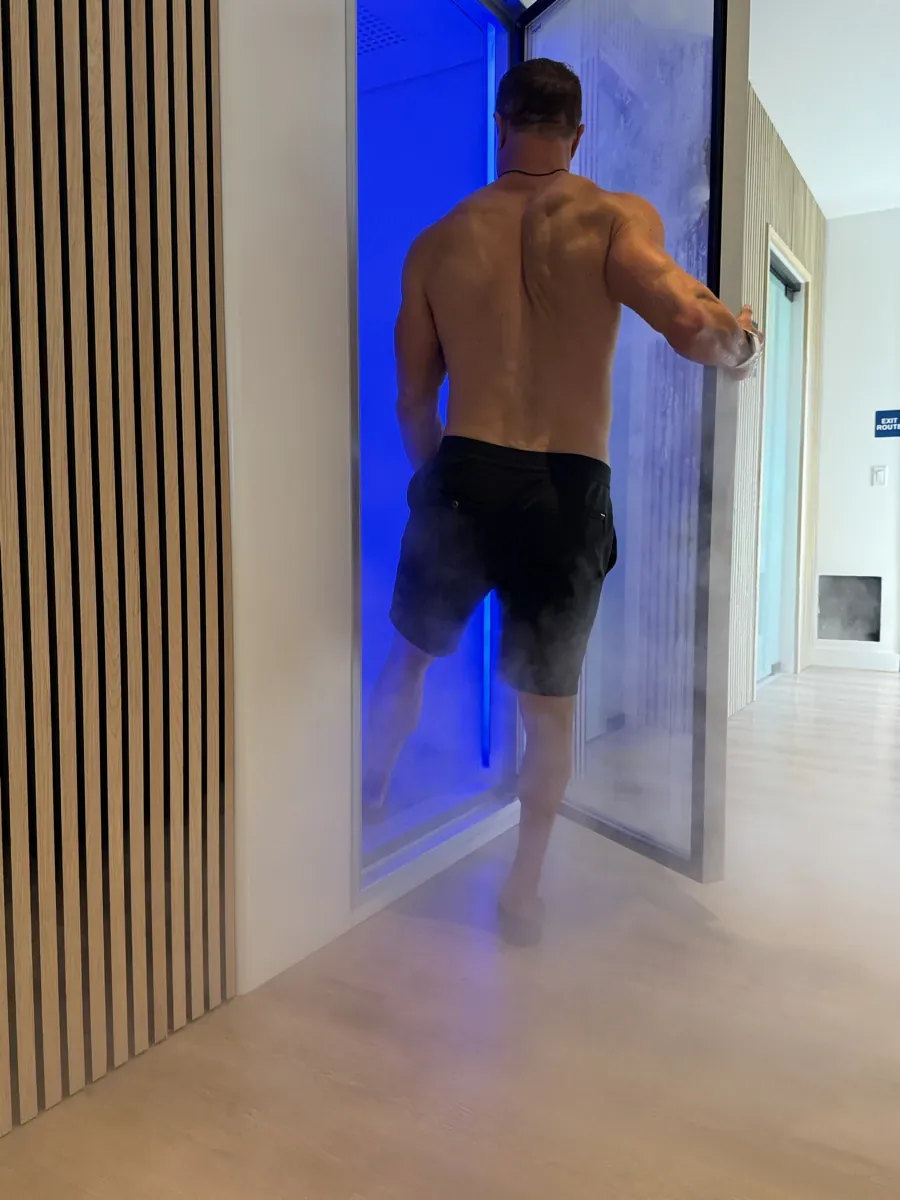
The reason to access these modalities within an integrated wellness center rather than piecing them together independently is coordination: your training, your recovery, and your physician-guided plan inform one another. That coordination is difficult to replicate by booking a sauna here and a cold plunge there.
How do training and recovery fit together at an integrated center?
The integrated model is straightforward in principle: structured training provides the stimulus, advanced recovery supports the adaptation, and functional-medicine assessment helps personalize both to your biology. Rather than treating these as separate purchases, an integrated wellness center coordinates them so each reinforces the others.
At Bluprint Wellness in Solana Beach, advanced recovery is one of four pillars — alongside performance training, functional medicine, and community — included within membership rather than billed as extras. For people who take training seriously enough to want the recovery side handled properly, that coordination is the difference. Membership is by application.